
Co-op
Start four-player co-op
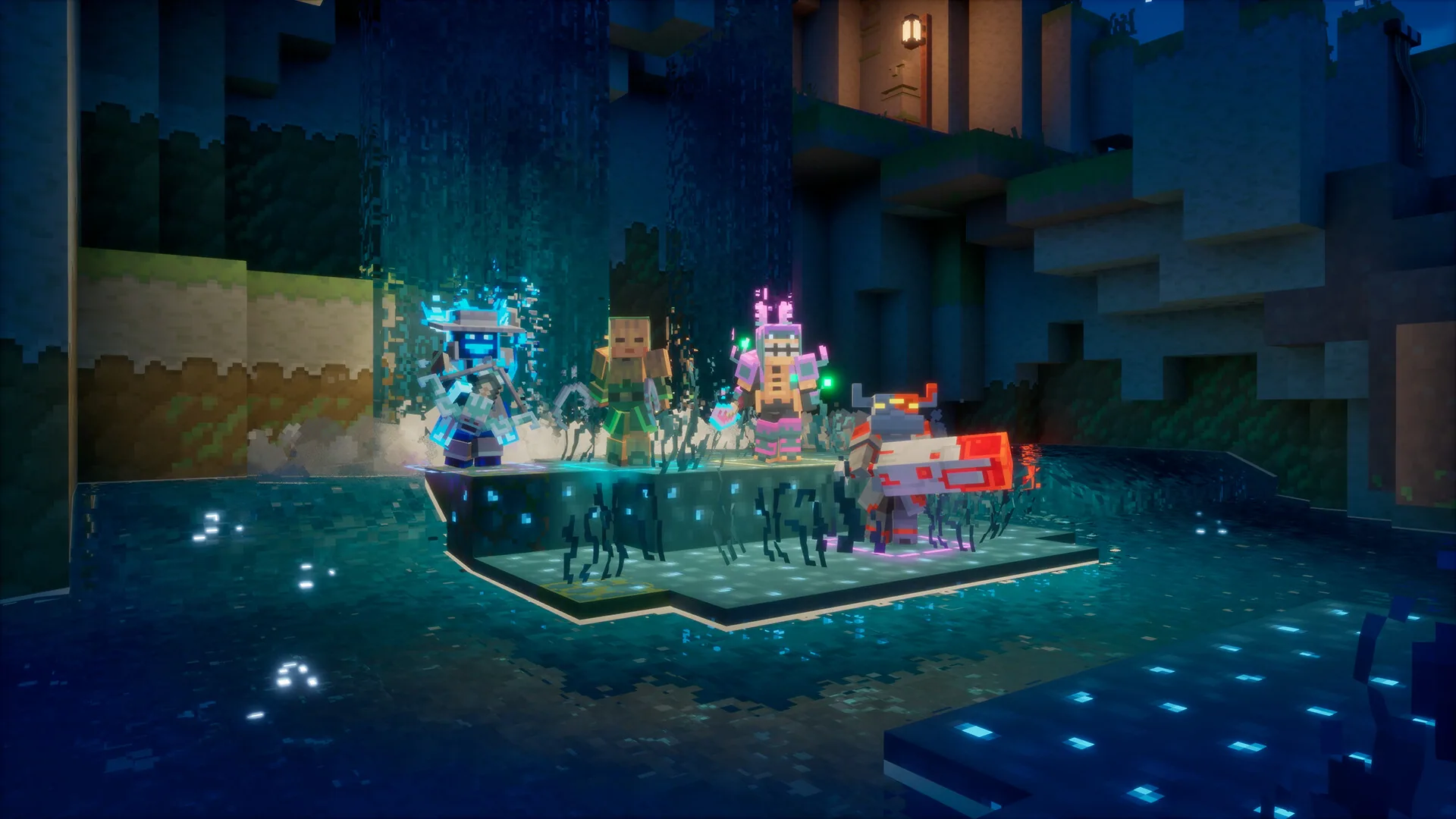
Solo play is still supported.
Shared screen on one console or PC.
Steam lists Cross-Platform Multiplayer.
Two or more players on one console/PC plus additional online players.
Minecraft Dungeons II supports a party of up to four heroes, and mixed co-op is the mode that joins local players with extra online teammates. You can still run solo. Couch co-op covers a local screen. Online cross-play covers remote allies. Matchmaking and party codes are new ways to form the group. This page stacks those six records so a phone-sized screen can start a four-player session without a fake HUD. Steam lists Shared/Split Screen Co-op beside Online Co-op, which is why a living-room pair can still add remote allies without dropping the local screen. Remote Play Together is listed on the same Steam page, so a couch session can still pull in extra players without everyone sitting on the same sofa. Family Sharing is listed there too, next to Steam Achievements.
Four players, still optional
The gameplay article and Steam both cap the party at four. Solo is not a second SKU: the same build runs one hero or four. If you are learning the Sift or the twelve-slot board, start alone, then open the party tools when the woods or a rift asks for more bodies.
The deluxe key art and the night-platform screenshot show four block-built heroes together. Those pictures are identity, not a roster of named characters. The four slots stay unnamed because official stills never label those heroes.
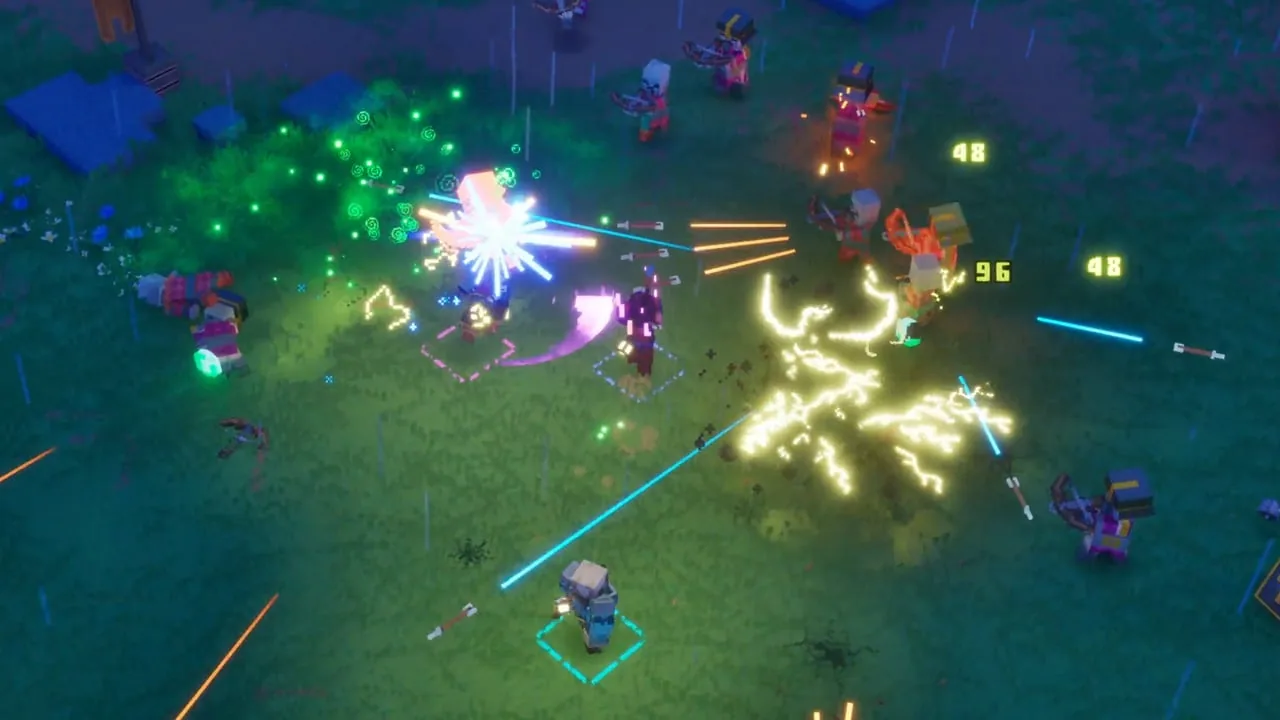
Damage numbers in the rainy Overworld still are the second co-op evidence image. They show a live four-player fight, not a lobby mockup. Use that shot when you need to see the party in the interconnected world rather than in a posed frame.
Steam categories list Single-player, Multi-player, Co-op, Online Co-op, Shared/Split Screen Co-op, and Cross-Platform Multiplayer together, so solo and four-player live in one build. The night-platform still and the rainy Overworld still are the two co-op images on this route. Damage numbers in the rain shot show a live fight, not a lobby. Remote Play Together is also listed on Steam, which matches a local screen that can still pull in extra players.
Couch, online, and mixed co-op
Couch co-op is local. Two or more people on one console or PC share the session. Online cross-play is the remote path, and Steam’s product categories include Cross-Platform Multiplayer, which matches the FAQ’s cross-play language.
Mixed co-op is the combination: two or more players on one console or PC plus additional online players. That is the mode this page is named for. It exists so a living-room pair can still pick up two remote friends without dropping the local screen.
Mixed co-op is not listed as a Deluxe extra. It is a launch multiplayer rule. Editions change cosmetics and later DLC, not the party size.
Couch co-op is the local screen. Online cross-play is remote. Mixed co-op is two or more people on one box plus extra online players, with the cap still four. Deluxe Edition changes cosmetics and later DLC, not this party math or the four-player cap. A Steam Windows player can still sit in a mixed session with console teammates under that cross-play flag.
Matchmaking and party codes
Matchmaking is new for the sequel: join other heroes who are already looking for a party. Use it when you do not have a friends list ready and still want a four-player Sift dive.
Party codes connect you to a specific game. They are the planned-group tool. Send a code instead of hoping matchmaking lands the same four people. The gameplay article lists both matchmaking and party codes as new ways to form a party.
Hero Cape rules also mention co-op. You do not need to own either Minecraft Dungeons or Minecraft Dungeons II if you join a friend’s co-op session on the same Microsoft account. That exception is a cape unlock path, not a substitute for buying the game if you want to host.
Matchmaking fills empty slots when you do not already have a group. Party codes target a specific session. Hero Cape FAQ also mentions co-op: you can unlock that cape from a friend's session on the same Microsoft account even if you do not own either dungeon crawler.
Starting a session on a small screen
On a phone-width layout this page stacks the four primary mode rows at 64px each so a thumb can read Max players 4, Local, cross-play, and the mixed co-op note without a twelve-column grid. Expand matchmaking and party codes in the notes below those rows.
Pick the mode before you pick the rift. A mixed group should form the party, then walk the Overworld to the rift they want. Friend teleport on the Overworld page is the recovery tool if someone drops into the wrong cave.
Achievements do not require four players unless a hidden row later says so. Public descriptions such as Equip a unique item or Activate all minecart stations are solo-capable. Use co-op when the fight is easier with four, not because the board demands it.
On a narrow screen the four mode rows stack at thumb height: Max players 4, Local, cross-play, and the mixed note. Form the party first, then walk the Overworld to the rift you want. Friend teleport recovers a teammate who dropped into the wrong cave.
Frequently asked questions
What is mixed co-op?
Mixed co-op lets two or more players on one console or PC fight alongside extra online players. It sits beside couch co-op (local only) and online cross-play (remote only). The party cap is still four.
How do party codes work?
Party codes connect you to a specific session instead of a matchmade pool. The gameplay article lists them with matchmaking as new party tools. Use a code when you already know who is playing; use matchmaking when you do not.
Can I play Minecraft Dungeons II solo?
Yes. Party size is a maximum of four, not a minimum. Solo play is listed alongside co-op on Steam. The twelve-slot loadout and the Sift rifts work in a party of one.
Does Deluxe change party size?
No. The party cap is four on Standard and Deluxe. Deluxe adds skins, the Soul cape, Blub, and two later DLC packs. Mixed co-op, matchmaking, and party codes ship with the base game.
Sources